Overall research programme
Renew4EHS: Pioneering Renewable Materials for Sustainable Electronics
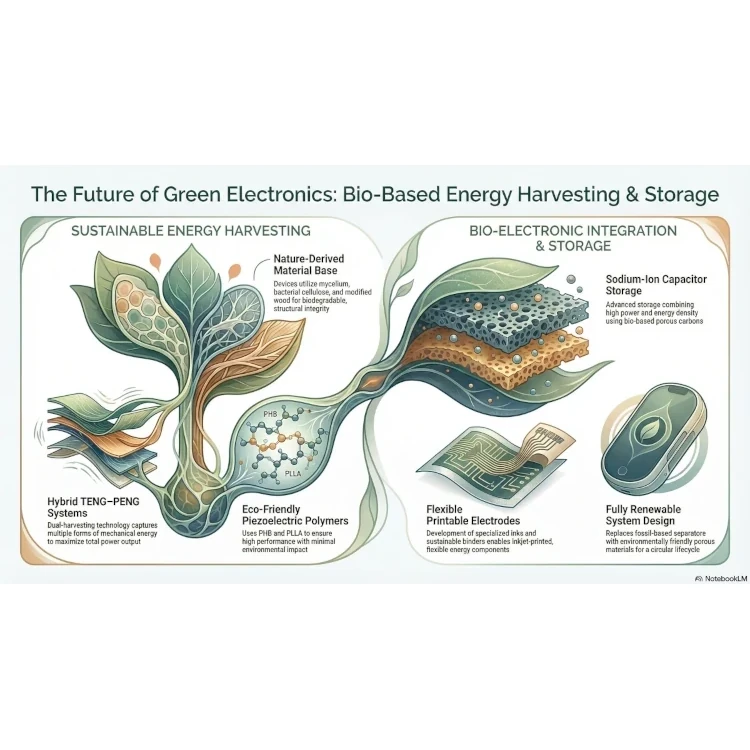
Renew4EHS focuses on redefining the future of electronics through renewable materials, circular design principles, and environmentally responsible innovation. Our research program is built around three interconnected pillars: renewable electronic components, energy harvesting systems, and next‑generation energy storage. Together, they lay the foundation for a new era of green, sustainable electronics.
Comet Zentrum (K1)
„WOOD – transition to a sustainable bioeconomy“ wird im Rahmen von COMET – Competence Centers for Excellent Technologies – durch das BMK (Bundesministerium für Klimaschutz, Umwelt, Energie, Mobilität, Innovation und Technologie), BMAW (Bundesministerium für Arbeit und Wirtschaft) und den mitfinanzierenden Bundesländer Kärnten, Niederösterreich und Oberösterreich gefördert

Sub Projects
01 Renewable Electronic Components
We are developing the next generation of electronic components by integrating bio‑based functional materials and creating demonstrators made entirely from renewable sources. Our work prioritizes sustainable substrates, recyclable conductive systems, and materials that minimize environmental impact.
Mycelium- and Cellulose-Based Electronics
Flexible, porous cellulosic materials allow us to design recyclable and biodegradable electronics for energy harvesting and storage. These paper-based electronics can power sensors used in structural health monitoring across sectors such as construction and automotive—improving safety, durability, and product lifespan.
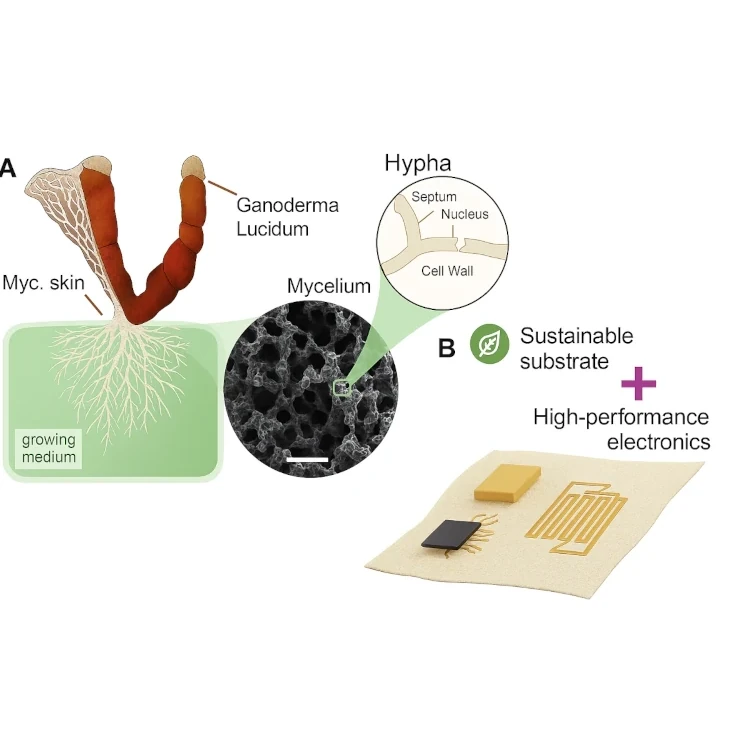
Mycelium-based substrates offer an eco-friendly alternative to conventional flexible materials like polyimides, helping reduce e‑waste and supporting a circular material cycle. Potential applications include:
- lightweight batteries
- smart packaging labels
- sensors in consumer and industrial products
Carbon-Based Conductive Inks
We develop conductive inks using renewable or secondary raw materials, avoiding traditional metal-based inks with high environmental footprints. Carbon-based inks are highly recyclable and do not interfere with end-of-life recovery processes, enabling more sustainable electronic components aligned with “Reuse & Recycle” principles.
02 Energy Harvesting & Self-Powered Sensors
Our second research focus is on energy-harvesting technologies that enable self-powered sensor networks—essential for mobile systems and the Internet of Things (IoT).
Triboelectric Nanogenerators (TENGs)
TENGs convert mechanical motion into electrical energy and play a crucial role in improving energy efficiency in buildings and smart infrastructure. By using renewable cellulosic, hydrogels and mycelium-based materials, we aim to create TENGs that are:
- more sustainable
- lightweight and flexible
- compatible with large-area manufacturing
We further investigate chemical modifications and filler doping to enhance material performance and energy output.
Piezoelectric Materials & Nanogenerators (PENGs)
Piezoelectric materials are essential for converting mechanical vibrations into electricity and are widely used in:
- electronic skin
- smart textiles
- biomedical sensors
Conventional materials often pose toxicity and e-waste challenges. Renewable alternatives—such as biodegradable piezoelectric materials, cellulose-based systems, biodegradable polymers and wood-inspired structures—offer a safer, more sustainable path to high-performance energy harvesters.
03 Sustainable Energy Storage Systems
The third pillar of Renew4EHS addresses the need for greener energy storage solutions, moving beyond lithium-ion systems and exploring renewable-source materials.
Sodium-Ion Capacitors
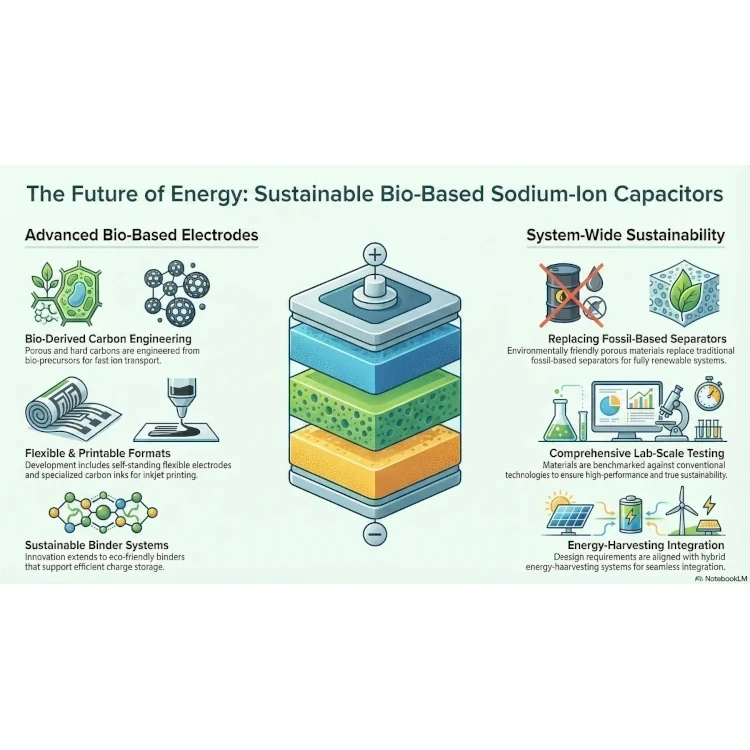
Sodium-ion capacitors combine the high energy density of batteries with the fast charging capabilities of supercapacitors—without relying on critical raw materials. Their performance depends on the development of advanced hard carbon electrodes with optimized structure and ion transport properties.
Bio-Based Hard & Porous Carbons
We engineer high-performance hard carbons for sodium-ion capacitors from renewable bio-based materials. These sustainable alternatives reduce dependence on fossil-derived carbon sources and support environmentally responsible production.
Mycelium-Based Separators
Fungal mycelium offers a naturally porous, high-surface-area structure ideal for electrodes and separators in energy storage devices. These bio-derived components replace conventional synthetic materials, reducing environmental impact while maintaining performance.